Families usually need more than an operation date: they need to know which specialists come first, what records to bring, how doctors choose between lip and palate procedures, and how long follow-up continues. By the end, you can map the child’s likely assessment, preparation, surgery, recovery and childhood review points while recognising which dates depend on growth, health and cleft anatomy.
Key takeaways
- Expect a team assessment before the operation date is set.
- Confirm feeding, growth, hearing and anaesthesia readiness at the first visit.
- Plan surgery alongside speech, hearing and dental follow-up.
- Arrange transport, admission documents and home care before surgery day.
What happens at the first craniofacial appointment?
The first visit is a team assessment, not a surgeon-only consultation. A craniofacial surgery appointment in Chennai should document the cleft pattern and the child’s readiness for anaesthesia before anyone fixes an operation date. The team will review feeding, growth, breathing, previous illnesses, hearing and any signs of an associated syndrome.
The team may examine:
- The lip, palate, nose, jaw and facial symmetry
- Airway, breathing and feeding technique
- Weight, length or height, nutrition and signs of anaemia
- Ears and hearing, with audiology testing when needed
- Teeth and gum development, including the future need for orthodontic care
- Speech or early sound development, with a speech-language assessment when appropriate
Bring these items to the appointment:
- Birth records, referral letters and reports from previous consultations
- Operation notes, discharge summaries and imaging or hearing reports
- A complete medication and allergy list
- Vaccination details and records of fever or recent respiratory infection
- Feeding information, including bottle type, feeding duration, choking or nasal regurgitation
- Recent weight measurements and growth records
- Clear photographs, if the team requested them
Ask for a written plan covering pre-operative tests, admission, the operation, wound and feeding reviews, speech and hearing checks, and emergency contact instructions. The cleft repair process in Chennai may involve staged procedures, so ask how long the child should remain locally after discharge before travelling home.
How doctors build the cleft repair treatment stages
Doctors do not choose the operation from the cleft label or the child’s age alone. A multidisciplinary cleft team maps the lip, palate, nose, jaw, feeding, growth, airway, hearing, teeth and speech, then checks for associated congenital anomalies. The pattern may also prompt genetic evaluation.
| Type of cleft | Usual treatment decision | What changes the plan |
|---|---|---|
| Isolated cleft lip | Lip repair, often at about 3–6 months | Width, nasal shape, growth and anaesthetic readiness |
| Isolated or submucous cleft palate | Palate repair, often during the first 18 months | Feeding, speech risk, airway, muscle anatomy and hearing |
| Unilateral or bilateral lip-and-palate cleft | Lip and palate repairs in separate stages | Cleft width, tissue growth, nutrition and nasal deformity |
| Syndromic, wide or complicated cleft | Individual staged procedures | Airway, heart or other conditions, fistula, speech, teeth and jaw growth |
Before fixing a date, the team reviews weight, nutrition, anaemia, bleeding risk, vaccinations, medicines, allergies and previous illness. Fever or an active respiratory infection can postpone anaesthesia; poor growth or an unrecognised airway or heart problem can change the entire sequence.
Later procedures are added only when a specific problem requires them. These can include lip or nose revision, fistula closure, secondary palate surgery, alveolar bone grafting, orthodontics or jaw surgery after facial growth. Families researching cleft repair surgery for timeline in Chennai should ask which finding triggers each stage, rather than accept a fixed calendar.
Planning ranges for surgery, hearing, speech and dental care
A cleft repair treatment stages plan is built around growth and function, not a single operation. A multidisciplinary team reviews the child’s anatomy, feeding and health before fixing dates. The cleft surgery recovery timeline therefore continues well beyond hospital discharge.
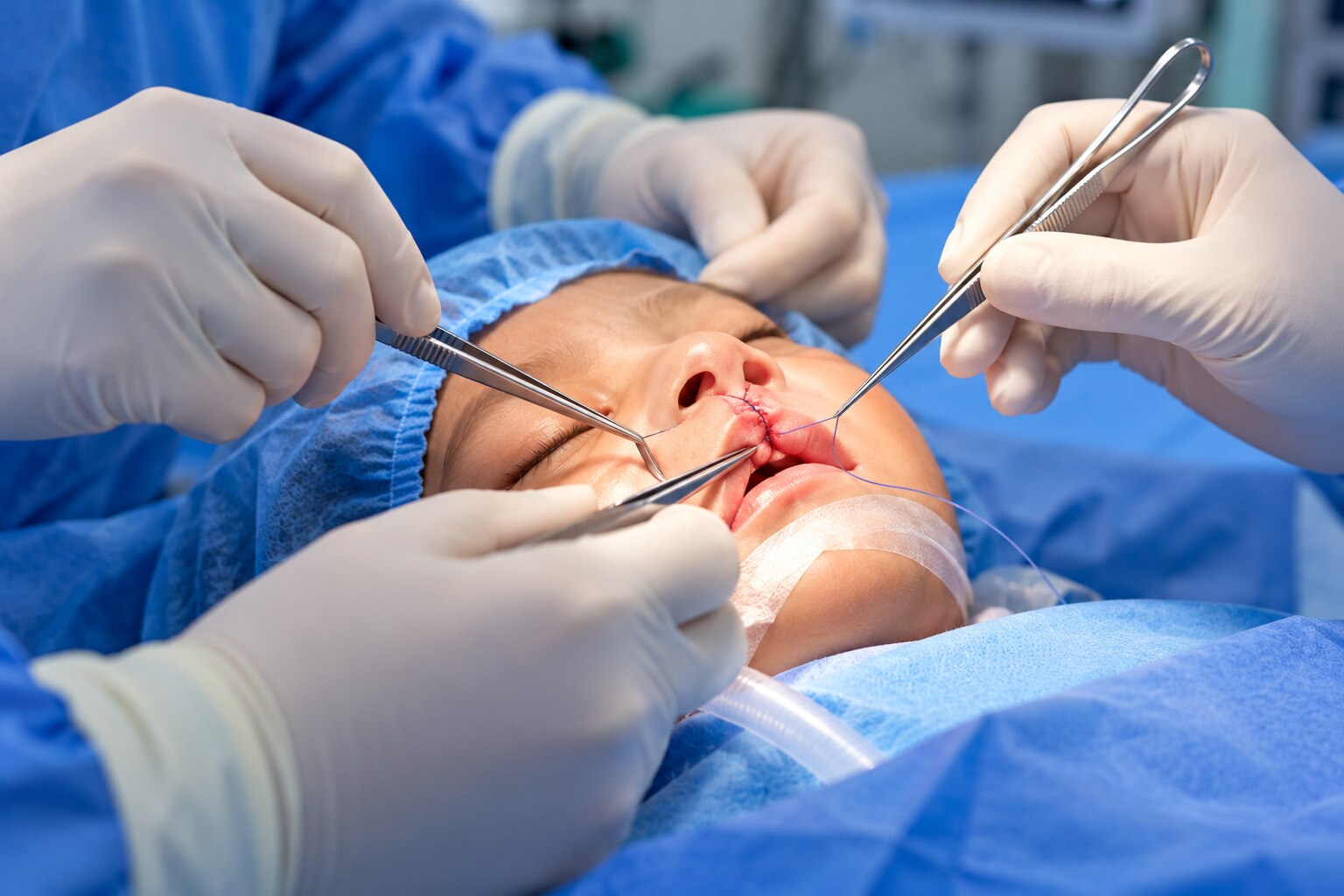
- Lip repair: about 3–6 months, if the child is growing well and medically fit for anaesthesia.
- Palate repair: during the first 18 months, often around 9–12 months, with anatomy, feeding, airway and team protocol influencing the date.
- Hearing care: audiology and ENT surveillance begins in infancy because middle-ear fluid can occur without pain. Ventilation tubes depend on hearing results and local protocol.
- Speech care: assess speech after palate repair and during language development; therapy follows the child’s needs.
- Dental care: arrange early dental reviews, then orthodontic planning as teeth and the jaw develop. An alveolar bone graft is timed to dental development, often before the permanent canine emerges.
These are planning ranges, not deadlines. Prematurity, low weight, anaemia or acute illness can postpone surgery. A syndromic cleft, airway problem or associated congenital anomaly can change the sequence. A wide or bilateral cleft can require staged repair, while a fistula or persistent speech problem can add another operation.
Orthognathic jaw surgery waits until facial growth is largely complete.
Preparing for admission and managing the first weeks after surgery
Before admission, the team confirms that the child is fit for anaesthesia, not simply old enough for surgery. An active cold, fever, poor weight gain, anaemia, bleeding risk, airway concern or an unassessed heart condition can postpone the operation. Ask for a written plan covering:
- Pre-operative blood tests, paediatric and anaesthetic clearance, fasting instructions, medicines to stop or continue, admission time and emergency contact details.
- Feeding arrangements, including upright positioning, paced feeds and a specialised bottle or nipple if suction is weak.
- The planned operation, expected stay, pain relief, wound care, feeding restrictions and how long travelling families should remain in Chennai after discharge.
- The first wound, feeding and weight reviews, plus later speech, hearing, dental and orthodontic appointments.
The cleft surgery recovery timeline usually includes hospital observation for several days. Lip wounds often begin healing over one to two weeks; palate repairs need feeding precautions for several weeks. Liquids or soft foods, and restrictions on spoons, straws or objects in the mouth, depend on the operation.
Irritability, swelling and slightly blood-stained saliva can occur. Breathing trouble, dehydration, persistent bleeding, wound separation, pus or worsening fever needs urgent surgical advice.
At the first postoperative review, the surgeon checks the incision or palate, hydration, feeding, pain and weight. Do not judge speech immediately after palate surgery; later assessment identifies resonance problems and guides therapy or further treatment. This sequence forms the practical cleft repair process in Chennai.
How to organise Chennai appointments and years of follow-up
Choose a coordinated multidisciplinary team, not a surgeon-only visit. At a craniofacial surgery appointment in Chennai, ask who will coordinate plastic or craniofacial surgery, paediatrics, anaesthesia, dentistry, speech therapy, audiology, nutrition and psychosocial care.
Use “cleft repair surgery for timeline in Chennai” as a search starting point, not a promised schedule. Before booking, ask whether the team shares records and checks fever, recent respiratory infection, weight, nutrition, anaemia, airway, bleeding risk, vaccinations and heart conditions before confirming anaesthesia.
| Service choice | What to confirm | Travel implication |
|---|---|---|
| Multidisciplinary cleft team | Named specialists, one shared treatment plan and a contact person | Combine assessments on one visit where possible |
| Surgeon-only consultation | Which hospital team provides hearing, speech, dental and nutrition reviews | Expect extra referrals and separate Chennai trips |
| Chennai surgery with local follow-up | Who handles wound checks, feeding concerns and urgent escalation near home | Fewer long journeys after discharge |
Request written dates for surgery, early review, audiology or ENT checks, speech assessments, dental visits and orthodontic monitoring. Keep operation notes, hearing reports, growth measurements, medication lists and imaging in one folder.
Plan for follow-up through growth, not just the first operation. Speech, hearing, facial growth, teeth and jaw alignment can lead to later procedures such as fistula closure, alveolar bone grafting, orthodontics or jaw surgery after facial growth.
If The Face Clinic is on your shortlist, ask how it coordinates these referrals and records over several years.
Frequently asked questions
What happens at the first craniofacial appointment?
The team records the cleft pattern and reviews feeding, growth, breathing, previous illnesses, hearing and possible associated syndromes before assessing anaesthesia readiness.
How do doctors build the cleft repair treatment stages?
They sequence care around the child’s cleft anatomy, health, feeding, airway, hearing, speech and dental development rather than setting surgery in isolation.
What should you plan besides cleft surgery?
Include hearing checks, speech assessment, dental and orthodontic care, recovery reviews and long-term craniofacial follow-up.
How can you prepare for admission and the first weeks after surgery?
Confirm fasting instructions, medicines, admission documents, transport, feeding instructions, wound care and warning signs with the treating team before admission.
Keywords