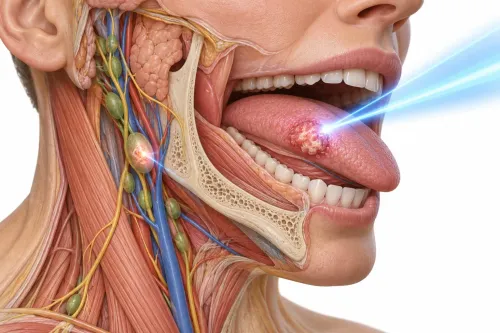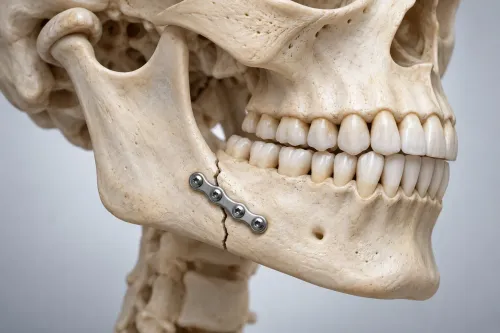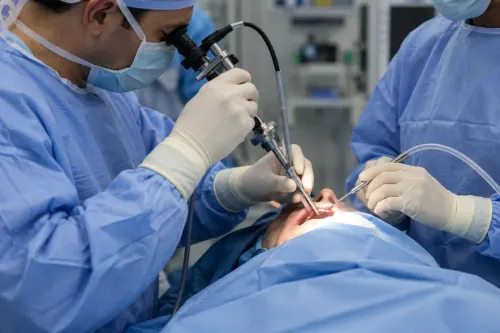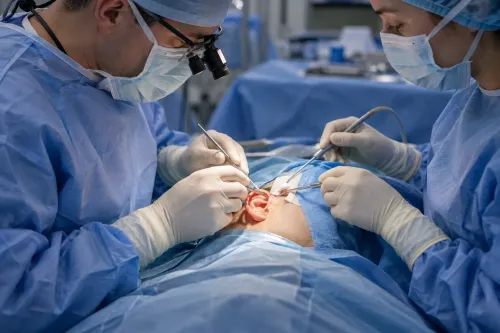
After a crash, fall, assault or sports injury, the first decision is not whether the face looks damaged; it is whether the airway, brain, eyes and cervical spine are safe. You will learn when to call 112, which symptoms need same-day assessment, how Chennai trauma teams investigate and repair injuries, and what follow-up supports the return of movement, vision, speech and a normal bite.
Key takeaways
- Call 112 for unconsciousness, breathing trouble, heavy bleeding or repeated vomiting.
- Do not move an injured person with possible neck or spine damage.
- Urgent orbital surgery protects vision when pressure, trapped muscles or severe displacement occurs.
- Follow wound, diet, medication and rehabilitation instructions to restore function after surgery.
What to do in the first minutes after a head or facial injury
Call 112 immediately after a road crash, fall, assault or sports injury if the person is unconscious, confused, difficult to wake, struggling to breathe, bleeding heavily, seizing or vomiting repeatedly.
Also call for unequal pupils, new weakness, loss of vision, clear fluid from the nose or ear, a suspected neck or back injury, or a facial injury that blocks the airway.
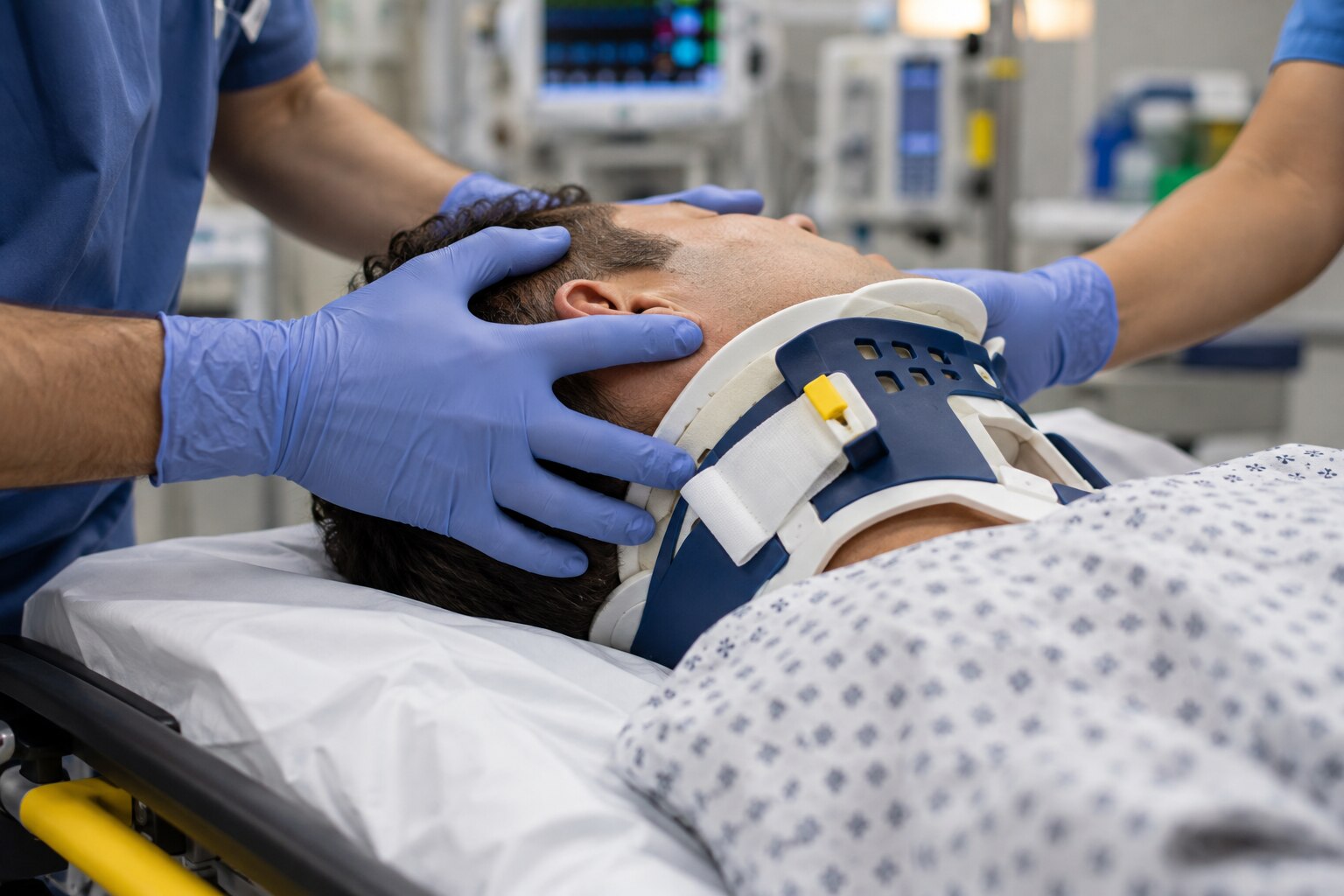
- Make the scene safe and keep the person still. Do not sit them up, turn their head or let them walk; a cervical-spine injury can worsen with movement.
- Support the head on both sides with your hands or folded clothing while help comes. Do not remove a helmet unless the person cannot breathe and trained rescuers must access the airway.
- Check breathing and responsiveness. Start CPR only if the person is unresponsive and not breathing normally, following the dispatcher’s instructions.
- Control visible bleeding with gentle direct pressure using clean cloth, but do not press on a visibly sunken skull or an object embedded in the wound.
- Do not give food, water, alcohol or pain medicine. Do not push loose teeth back into the socket.
If vomiting threatens the airway, tell 112 and follow instructions for a coordinated roll while keeping the neck aligned. Arrange same-day assessment for double vision, jaw locking, a changed bite, numbness, facial weakness, difficulty swallowing or persistent nosebleed. Prompt head and neck trauma treatment in Chennai begins with stabilisation, not cosmetic repair.
How emergency teams separate brain, spine and facial emergencies
A normal-looking face does not rule out a dangerous brain or cervical-spine injury. Effective head and neck trauma management in Chennai starts with airway, breathing and circulation, while the neck remains protected until spinal injury is excluded. Blood, swelling, loose teeth or an unstable midface can obstruct the airway quickly.
| Finding | Immediate concern | Lead team |
|---|---|---|
| Airway obstruction, uncontrolled bleeding or facial swelling | Suffocation or shock | Emergency and trauma clinicians |
| Fainting, confusion, worsening drowsiness, repeated vomiting, seizure or unequal pupils | Intracranial bleeding or brain injury | Neurosurgery |
| Neck pain, midline tenderness, limb weakness, numbness or paralysis | Cervical-spine fracture or cord injury | Trauma and spine teams |
| Vision loss, severe eye pain, a fixed eye or restricted eye movement | Orbital or globe injury | Ophthalmology |
| Clear fluid from the nose or ear, facial weakness or a suspected open skull fracture | Skull-base or cranial-nerve injury | Neurosurgery, ENT and maxillofacial surgery |
A person can have a small cut—or no visible facial injury—while force has fractured the skull base, injured the brain, trapped an eye muscle or damaged the cervical spine. Clinicians therefore use neurological examination, pupil checks, the Glasgow Coma Scale and CT criteria, not facial appearance, to decide urgency.
Once immediate threats are controlled, maxillofacial or plastic surgery addresses facial bones and soft tissue, ENT manages nasal, sinus and airway problems, ophthalmology protects vision, and dentistry checks teeth and the bite. Choose a trauma-capable hospital when injuries cross these boundaries.
How Chennai doctors diagnose fractures and choose the repair
A facial trauma specialist in Chennai examines more than the visible cut. The assessment checks consciousness, pupils, eye movements and double vision; facial sensation and nerve movement; mouth opening, swallowing, speech, nasal airflow, dental bite, loose teeth and midface or jaw stability. Protecting the cervical spine continues until examination and imaging exclude injury.
Thin-slice CT of the head, facial bones and cervical spine usually provides the clearest fracture map. Axial and coronal slices show thin breaks, displaced bone, orbital contents and spinal alignment; three-dimensional views help plan fixation but cannot replace those slices. MRI is added for suspected spinal-cord, ligament, brain or soft-tissue injury.
Plain facial X-rays have a limited role.
| Option | What it means | When it applies |
|---|---|---|
| Observation | Monitoring without immediate repair | Stable, nondisplaced fractures without vision, bite, nerve or airway problems |
| Wound repair | Cleaning and closing skin or mucosal injury | Lacerations after bleeding and contamination are controlled |
| Closed reduction | Repositioning bone without an incision | Selected nasal or simple fractures that remain stable afterward |
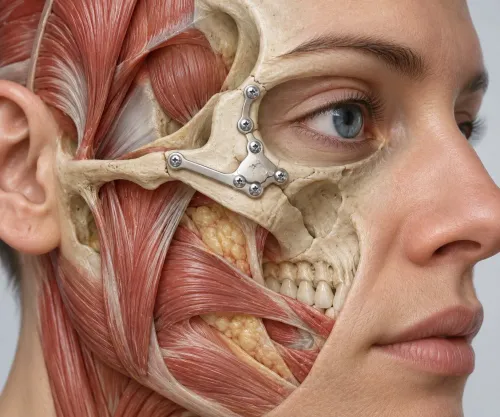
| Fixation | Holding reduced bone with plates, screws or wires | Displaced, unstable fractures or a changed bite |
| Staged reconstruction | Treating urgent damage first and rebuilding later | Contamination, severe swelling, brain injury, threatened vision or patient instability |
Clean displaced fractures are often repaired after resuscitation and CT, before early healing makes reduction difficult. Operating before the patient is stable increases risk; delaying every fracture can make accurate alignment harder. Bring the CT images, report, dental records or pre-injury bite photographs to review.
When an orbital or facial injury needs urgent surgery
Observation is safer when vision is intact, eye movements are full, the globe sits normally, and the fracture is small or minimally displaced. A repeat examination after swelling decreases can prevent unnecessary orbital surgery; operating on a stable eye only to improve an early, swelling-related double image can create new scarring or motility problems.
Timing changes when any of these findings is present:
- Vision loss, a fixed dilated pupil, severe proptosis or rapidly rising eye pressure requires emergency eye and surgical assessment. Protecting the globe takes priority over routine fracture repair.
- Entrapped muscle, especially in a child, causes restricted movement, nausea or pain on looking up or down. Release the muscle promptly; waiting can cause lasting double vision.
- A sunken eye or marked change in eye position indicates altered orbital volume. Repair is planned early enough to restore the socket before healing fixes the bones in the wrong position.
- Swelling can hide the examination and increase operative risk. Stabilise the patient and reassess, but do not delay a threatened eye or allow a displaced fracture to become difficult to reduce.
- Dirt, saliva, devitalised tissue or an open sinus wound calls for irrigation, antibiotics and wound treatment first. Definitive fixation may be staged after contamination is controlled.
- A clean, displaced fracture is usually repaired after resuscitation and CT planning, before early healing makes accurate reduction harder.
For head injury facial reconstruction in Chennai, thin-slice CT with axial and coronal views guides orbital planning; 3-D images alone can miss fine fractures. Head and neck trauma treatment in Chennai should occur where eye, brain, airway and facial-skeleton teams can coordinate when injuries overlap.
What faster functional recovery requires after trauma surgery
Faster recovery depends on protecting function while tissues heal, not on judging the result by the mirror. Follow the operating team’s schedule for jaw-opening exercises: moving too soon can disturb fixation or wounds, while prolonged immobilisation can cause trismus.
| Function | Protect it during recovery | Seek prompt review for |
|---|---|---|
| Bite and jaw movement | Use the prescribed diet, avoid chewing before clearance, and record any bite change | Teeth no longer meet, jaw locking, worsening stiffness |
| Swallowing and speech | Request swallowing or speech assessment if eating, drinking or speaking changes | Choking, coughing with fluids, unclear speech |
| Sensation and facial nerve | Compare numbness and facial movement at each visit; protect numb skin from heat and injury | New facial weakness, spreading numbness |
| Vision | Attend eye checks for pupils, eye movement and double vision | Vision loss, fixed dilated pupil, severe proptosis or restricted movement |
| Scars and wounds | Keep incisions clean, follow dressing instructions and use only approved scar treatment | Increasing redness, discharge, wound opening or exposed hardware |
A facial trauma specialist in Chennai should review dental occlusion, mouth opening, sensation, facial-nerve movement, swallowing, speech, nasal airflow and vision—not just photographs. Choose head and neck trauma management in Chennai that can coordinate emergency care, neurosurgery, maxillofacial or plastic surgery, ophthalmology, ENT and dentistry when injuries cross boundaries.
The Face Clinic is worth assessing by asking who performs each review and how urgent problems are handled after discharge. Bring CT images and the report, medication list, tetanus status, dental records or pre-injury bite photographs.
Related services
Maxillofacial Trauma & Reconstruction Facial trauma, whether from road traAic accidents, industrial injuries, sports, or assault, requires timely and skillful intervention to restore both... View service → |
OCCULOPLASTY AND FACIAL PLASTIC SURGERIES HEAD AND NECK TRAUMA MANAGEMENT ₹500 head and neck trauma associated with orbital fracture surgeries, facial fracture surgeries, secondary post traumatic deformity surgeries associated... View service → |
Frequently asked questions
What should you do in the first minutes after a head or facial injury?
Call 112 for unconsciousness, confusion, breathing difficulty, heavy bleeding, seizures, repeated vomiting or difficulty waking. Keep the person still, protect the neck and avoid giving food or drink.
How do emergency teams distinguish brain, spine and facial emergencies?
They first assess breathing, circulation, consciousness, pupils and limb movement, then check for neck tenderness, neurological changes, facial wounds, bite changes, eye symptoms and skull or facial deformity.
How do doctors diagnose facial fractures in Chennai?
Doctors examine vision, eye movement, jaw opening, dental alignment, sensation and facial movement. They use CT imaging when they need to map fractures and plan reconstruction or fixation.
When does an orbital or facial injury need urgent surgery?
Urgent review is needed for vision loss, a rapidly swollen or painful eye, restricted eye movement, double vision, a trapped eye muscle, severe displacement, uncontrolled bleeding or an airway threat.
What helps faster functional recovery after trauma surgery?
Protect the repair, take prescribed medicines, follow wound and diet instructions, attend reviews, avoid smoking and return to jaw, facial or eye rehabilitation when your surgeon advises.
Related services
Facial Reconstruction & Corrective Jaw Surgery Facial reconstruction is crucial for patients with congenital deformities, trauma, or disease related tissue loss. View service → |
Salivary Gland & Jaw Pathology Management We treat a wide spectrum of benign and malignant lesions involving the salivary glands, maxilla, mandible, and associated soft tissues. View service → |
Keywords