Older age changes the clues clinicians rely on: medicines and dehydration can reduce saliva, dentures and tooth loss can hide jaw disease, and osteoporosis treatment can affect healing after dental procedures. You will learn which symptoms fit dryness, infection, obstruction, benign disease or cancer, which tests separate them, and when to seek coordinated assessment.
Key takeaways
- Review medicines, diabetes, dehydration and radiotherapy before blaming persistent dry mouth on ageing.
- Report one-sided swelling, a firm lump, numbness, bleeding or trouble swallowing promptly.
- A jaw lesion needs imaging and tissue diagnosis when it persists beyond routine dental treatment.
- Look for coordinated dental, radiology, pathology and head-and-neck surgical care.
Why age changes the way these conditions appear
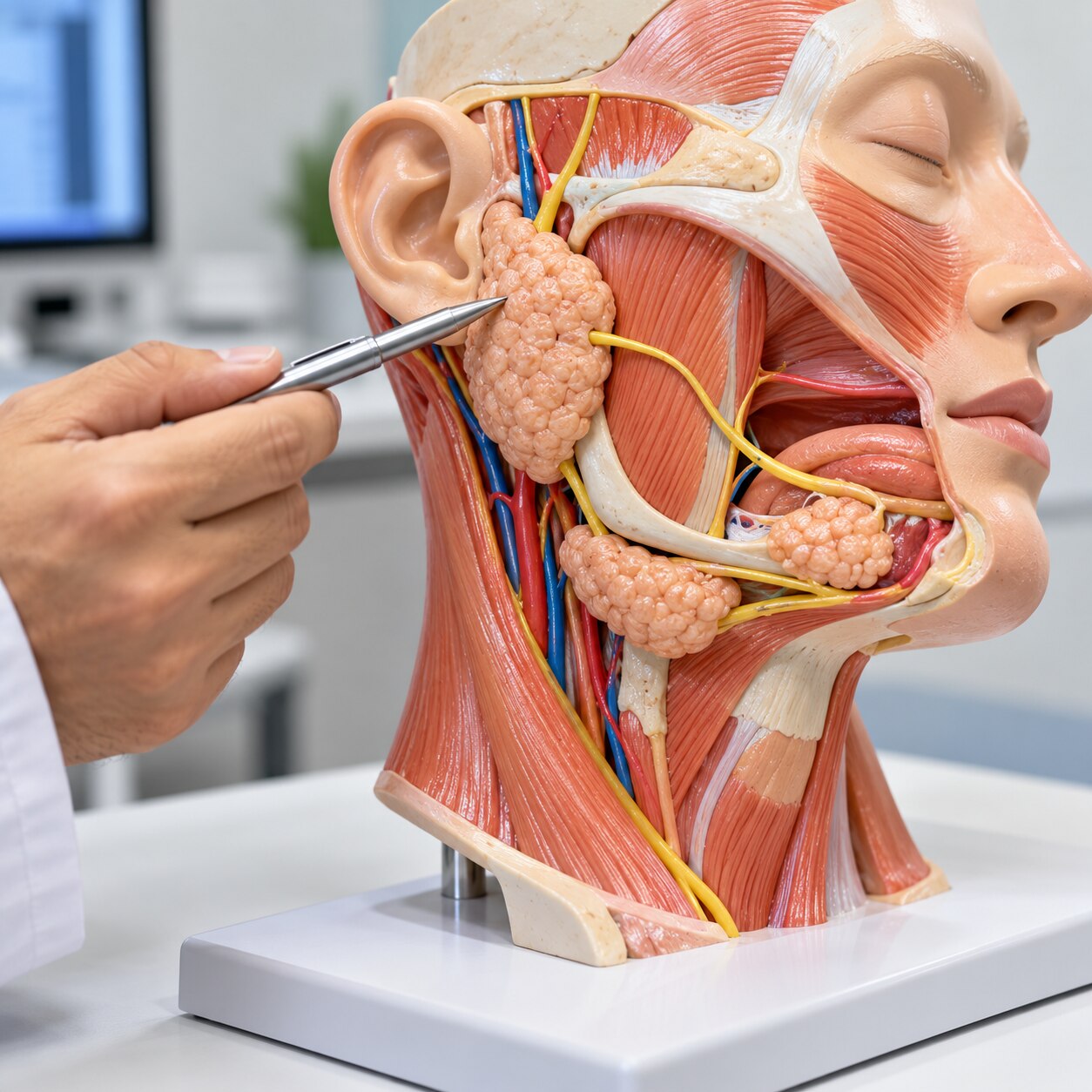
Salivary gland and jaw conditions in older adults in Chennai can look different because several risks overlap, not because Chennai has a unique disease pattern. Ageing alone does not adequately explain persistent dry mouth, swelling or pain. Anticholinergics, antidepressants, antihypertensives, diuretics and opioids can reduce saliva, as can diabetes, dehydration and previous head-and-neck radiotherapy.
Less saliva raises the risk of root caries, periodontal and other oral infections, and difficulty chewing or swallowing. Dentures, tooth loss, denture trauma, osteoporosis, frailty, poor nutrition, cognitive impairment and a reduced immune response can then make diagnosis and healing harder.
An older adult can have salivary-gland disease and jaw disease at the same time; dry mouth does not explain every lump or painful tooth.
Ask these questions during assessment:
- Which medicines are being taken, and can a prescriber review their dry-mouth effects? Do not stop them independently.
- Is there diabetes, dehydration, previous head-and-neck radiotherapy, tobacco use or areca-nut use?
- Do dentures rub, cause ulcers or fit loosely? Has a tooth recently been extracted?
- Are bisphosphonates, denosumab or another osteoporosis medicine being used?
- Can the person maintain oral hygiene, eat adequately and attend follow-up appointments?
Persistent symptoms need examination rather than acceptance as normal ageing.
How to read salivary swelling, dryness and warning signs
Dry mouth without swelling points first toward medicines, diabetes or another systemic illness, dehydration, or previous head-and-neck radiotherapy—not ageing alone. Review anticholinergics, antidepressants, antihypertensives, diuretics and opioids with the prescriber; persistent dryness raises the risk of root caries, infection and swallowing difficulty.
Everyday timing helps narrow salivary gland problems in elderly people in Chennai:
- Pain and swelling that intensify during meals suggest a blocked duct or salivary stone.
- Fever, tenderness, redness or pus suggest bacterial sialadenitis and need prompt medical assessment.
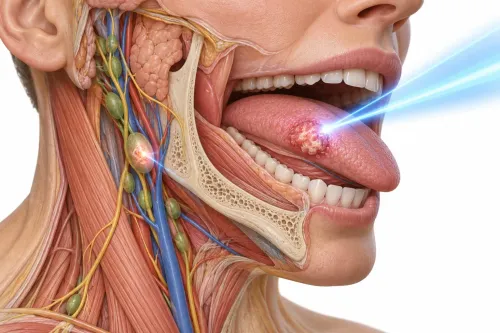
- A persistent painless parotid or submandibular lump needs evaluation for pleomorphic adenoma, Warthin tumour and malignancy. Age or a lump alone does not prove cancer.
Seek prompt head-and-neck assessment for a fixed, painful or rapidly enlarging mass, skin ulceration, neck nodes, facial-nerve weakness, numbness, persistent pain, blood in saliva, unexplained weight loss, difficulty swallowing or difficulty opening the mouth. Do not watch these signs indefinitely.
Practical salivary gland care for seniors in Chennai includes medically appropriate water intake, sugar-free gum or lozenges when salivary function remains, fluoride toothpaste or other fluoride prevention, and regular dental reviews. Avoid tobacco, alcohol-containing rinses and frequent sugary drinks; saliva substitutes improve comfort but do not restore gland function.
How jaw lesions differ from routine dental problems
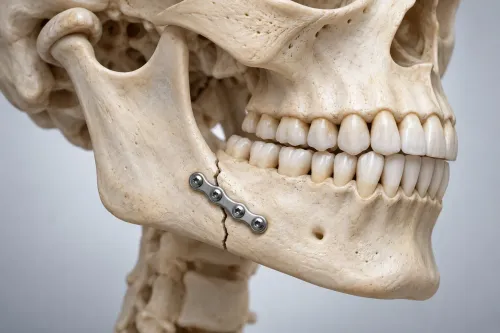
Decay causes a visible cavity, periodontal infection causes tender gums or pus, and denture trauma causes a sore matching a pressure point. These problems usually improve after targeted dental treatment. Jaw lesions in older adults in Chennai need imaging when symptoms persist or do not match that pattern.
| Feature | Routine dental problem | Lesion needing investigation |
|---|---|---|
| Non-healing socket | Healing progresses after extraction | Persistent opening, pain or exposed bone |
| Loose tooth | Plaque-related periodontal loss | Mobility without severe gum disease |
| Swelling or bleeding | Local infection settles with treatment | Persistent swelling or recurrent bleeding |
| Sensation or imaging | No numbness; local dental change | Lower-lip or chin numbness; radiolucent or radiopaque area |
The wider differential includes an odontogenic infection or cyst, osteomyelitis, a benign odontogenic lesion, oral cancer, metastatic disease and medication-related osteonecrosis of the jaw. Do not keep repeating antibiotics without examination and imaging.
MRONJ means current or previous treatment with a bisphosphonate, denosumab or selected antiangiogenic drug, plus exposed bone or bone probeable through a fistula for more than eight weeks, with no jaw radiation or obvious metastasis. Extraction is not automatically forbidden. Do not stop osteoporosis or cancer medicines without the prescriber.
Risk assessment must record the drug’s indication, route and duration, steroid use, diabetes, smoking, periodontal disease and the planned procedure. Coordinate the decision among the prescriber, dentist and oral-and-maxillofacial team.
Which tests clarify a salivary or jaw problem
Begin with history and examination; imaging and tissue sampling then answer different questions.
Ask about symptom timing, dental and medical history, medicines, osteoporosis or cancer treatment, tobacco and areca-nut exposure, radiotherapy, dentures and previous extraction. Meal-related swelling suggests duct obstruction, while fever and pus support infection. Examine the mouth, teeth, neck, salivary duct openings, facial movement and facial sensation.
| Test | What it adds |
|---|---|
| Dental radiographs | Shows decay, periodontal disease, tooth roots and nearby local bone |
| Panoramic radiograph | Surveys both jaws, teeth, the mandibular canal and maxillary sinuses |
| Ultrasound | Assesses many superficial salivary masses, duct dilation and nearby lymph nodes |
| CT | Defines cortical bone destruction, calcification and surgical anatomy |
| MRI | Maps marrow, nerves and extension into soft tissues |
Use needle aspiration for a fluid-filled or accessible salivary mass when cytology can guide the next step. Use a core biopsy when a solid lesion needs tissue architecture or aspiration is insufficient. A blood count, inflammatory markers and glucose can support suspected infection; kidney function, calcium and coagulation tests help assess treatment safety.
Do not repeatedly label a swelling an abscess without reassessing its teeth, bone, nerves and adjacent soft tissues. Do not biopsy blindly: imaging can reveal a safer route and show whether the lesion involves the mandibular canal, maxillary sinus or deeper spaces.
What coordinated care should you look for in Chennai
Choose a service that can connect examination, imaging, tissue diagnosis and treatment when a symptom crosses dental, salivary and cancer boundaries. A jaw pathology specialist in Chennai may coordinate several distinct roles rather than provide every opinion personally.
| Role | Contribution | When it matters |
|---|---|---|
| Oral-and-maxillofacial surgeon | Examines, biopsies and operates | Jaw lesions, deep infection or surgical planning |
| Oral and maxillofacial pathologist | Interprets biopsy tissue | Cyst, tumour, inflammation or cancer diagnosis |
| Radiologist | Selects and reads imaging | Ultrasound, CT or MRI findings need correlation |
| ENT or head-and-neck cancer team | Assesses salivary or mucosal malignancy | Neck nodes, facial weakness, ulceration or a growing mass |
Ask the clinic:
- Who examines the mouth, jaw, ducts, neck and facial nerves?
- Which imaging test fits the suspected problem?
- Who interprets a biopsy, and who explains the treatment plan?
- What happens if the lesion needs cancer, reconstruction or hospital care?
Repeated antibiotics without reassessment can delay diagnosis. Routine dental care alone is not enough for a non-healing socket, persistent swelling, numbness or unexplained tooth mobility.
The Face Clinic can be considered when findings indicate head-and-neck, maxillofacial or reconstructive assessment; the examination, not the clinic name, should determine the referral.
From Velachery, Pallikaranai or Tambaram, choose a service you can reach for review and follow-up, but travel distance must not delay urgent assessment. Treatment planning also depends on renal function, anticoagulants, frailty, nutrition, cognition, oral-hygiene ability, healing risks and your personal goals.
Related services
Salivary Gland & Jaw Pathology Management We treat a wide spectrum of benign and malignant lesions involving the salivary glands, maxilla, mandible, and associated soft tissues. View service → |
We provide comprehensive oncologic surgery for tumours and malignancies affecting the face, oral cavity, jaws, and neck without damaging the... View service → |
Frequently asked questions
Why can salivary gland and jaw conditions appear differently in older adults?
Ageing overlaps with medicine side effects, diabetes, dehydration, reduced immunity and previous head-and-neck radiotherapy. These factors can alter saliva, healing, pain and the appearance of disease.
Which salivary symptoms need prompt assessment?
Arrange assessment for persistent or one-sided swelling, a firm lump, recurrent gland pain, blood in saliva, facial weakness, numbness, difficulty swallowing or dry mouth that causes sores and dental decay.
How are jaw lesions different from routine dental problems?
Routine dental pain often improves after treating decay, gum infection or a damaged tooth. A lesion that persists, enlarges, causes numbness, loosens teeth without explanation or appears on imaging needs further evaluation.
Which tests clarify a salivary gland or jaw problem?
Depending on the examination, clinicians may use dental X-rays, ultrasound, contrast CT, MRI, blood tests, fine-needle aspiration or a biopsy. Pathology confirms what abnormal tissue represents.
What coordinated care should older adults seek in Chennai?
Choose a team that can connect oral examination, dental care, imaging, pathology and head-and-neck surgery, while reviewing medicines and medical conditions that affect saliva, healing and treatment safety.
Related services
TMJ Surgery (Temporomandibular Joint Disorders) Disorders of the jaw joint can cause chronic pain, diAiculty chewing, and locking of the jaw. View service → |
Management of Maxillofacial Infections Untreated dental or facial infections can spread rapidly and require surgical management. View service → |
Facial Reconstruction & Corrective Jaw Surgery Facial reconstruction is crucial for patients with congenital deformities, trauma, or disease related tissue loss. View service → |