Adults with a severe bite problem, facial asymmetry or chewing difficulty need to know whether the cause lies in the teeth or in the jawbones. By the end, you will be able to identify signs that warrant an orthognathic assessment, understand the treatment sequence and recovery burden, and judge whether a proposed plan is sufficiently thorough.
Key takeaways
- Skeletal jaw mismatch requires assessment beyond orthodontic treatment alone.
- Adult eligibility depends on completed growth, health and a detailed bite evaluation.
- Expect orthodontic planning, surgery, a liquid or soft diet and staged recovery.
- Compare surgeon training, hospital support, imaging and complication planning before choosing.
When does an adult bite problem require jaw surgery rather than braces?
An adult bite problem points to a skeletal discrepancy when the upper and lower jawbones are mismatched, not merely when individual teeth sit crooked. Underbite, severe overbite, open bite, crossbite, facial asymmetry, chewing or bite-related speech difficulty, airway obstruction, and progressive dental compensation all warrant assessment for corrective jaw surgery in Chennai for adults.
An orthodontist compares the tooth position with the underlying jaw relationship using examination, bite records, photographs, facial measurements, dental scans or models, and imaging when needed. The pattern usually falls into one of two groups:
| Finding | More consistent with a skeletal problem | More consistent with a tooth-position problem |
|---|---|---|
| Underbite, overbite or crossbite | The jawbases remain mismatched when teeth are assessed in a planned position; the chin or face may appear unbalanced | Teeth are tipped or crowded within reasonably proportioned jaws |
| Open bite | A vertical jaw discrepancy causes separation that braces alone cannot close predictably | A limited gap results from tooth angulation or habits |
| Function or airway | Chewing, speech or airway obstruction follows jaw position; teeth show progressive compensation | Function improves when teeth are aligned without changing jaw position |
| Facial asymmetry | The upper or lower jaw is shifted, rotated or uneven | Asymmetry is limited to tooth alignment |
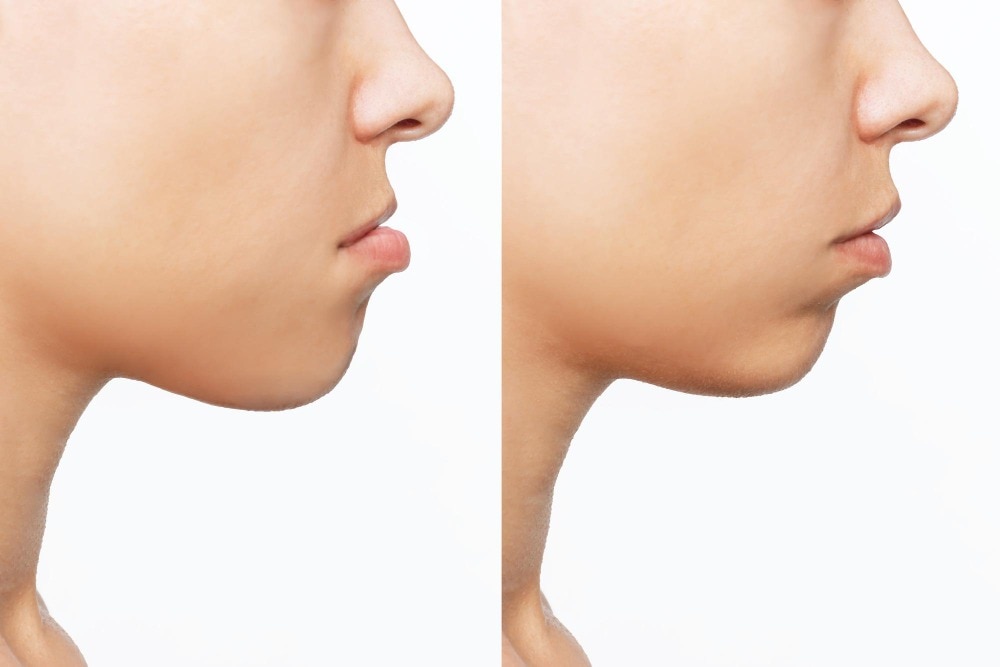
Braces or clear aligners move teeth. Surgery changes the position of the jawbones, often with orthodontics before and after the operation. Facial changes are a consequence of correcting jaw proportions, not the sole purpose of treatment; jaw alignment surgery in Chennai is considered when tooth movement alone cannot provide a stable bite and useful function.
What makes an adult eligible for orthognathic surgery?
Adults are eligible for orthognathic surgery in Chennai when facial growth is substantially complete and a skeletal jaw problem cannot be corrected with orthodontics alone. Eligibility depends on health, oral condition, expectations and the ability to complete treatment, not age by itself.
1. Confirm that growth is nearly complete. The surgeon and orthodontist assess jaw development, bite, facial proportions and whether the proposed bone movement addresses a functional problem.
2. Check health and healing risks. Stable general health is important. Smoking raises wound and bone-healing risks; uncontrolled diabetes increases infection and healing problems; active periodontal disease threatens teeth and surgical stability. Treat these issues before surgery. Untreated obstructive sleep apnoea also requires assessment and management because anaesthesia and postoperative swelling can worsen airway risk.
3. Assess readiness for a long plan. Healthy gums and teeth, realistic expectations and willingness to complete orthodontic treatment before and after surgery are essential. Braces or aligners alone do not replace surgery when the jawbones are misaligned.
4. Complete a full assessment, including clinical examination, orthodontic records, dental models or intraoral scans, facial photographs, facial measurements, bite analysis, and panoramic or cephalometric imaging. A photograph or single panoramic radiograph is not enough. Cone-beam CT and three-dimensional planning help when anatomy, trauma or facial asymmetry makes jaw position difficult to judge.
A coordinated review by an oral and maxillofacial surgeon and orthodontist clarifies whether the expected functional and facial changes justify the operation.
What happens before, during and after the jaw operation?
Braces or clear aligners usually surround the operation because surgery alone does not correct tooth positions. Pre-surgical orthodontics removes dental compensation and places the teeth for the planned bone movement; post-surgical orthodontics fine-tunes the bite after the jaws heal. The full plan takes much longer than the operation itself.
- Le Fort I maxillary osteotomy to reposition the upper jaw
- Bilateral sagittal split osteotomy to move the lower jaw
- Genioplasty to reshape or reposition the chin
- Combined upper-and-lower jaw surgery for discrepancies affecting both jaws
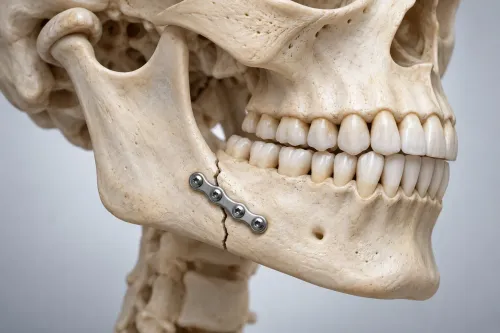
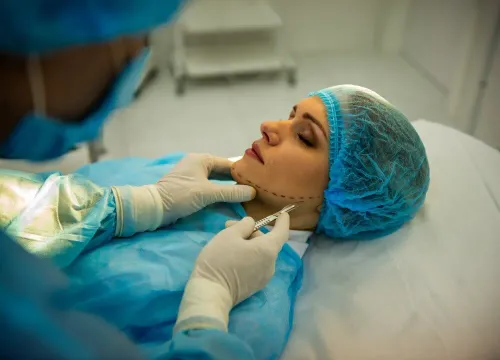
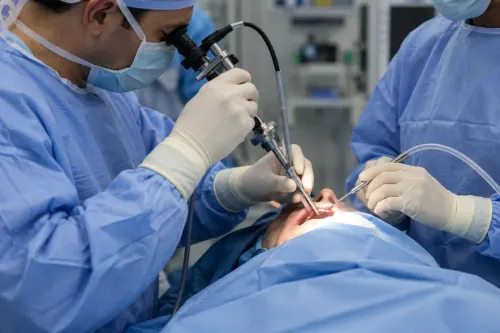
2. Under general anaesthesia, the surgeon cuts the planned jaw segments, moves them into position and checks the bite with a custom surgical splint. Fixation plates and screws hold the bones stable while they heal.
3. After surgery, orthodontic treatment continues once healing permits. Plates often remain permanently because removing them requires another operation; removal is considered if a plate becomes exposed, infected, painful or otherwise troublesome.
Jaw alignment surgery in Chennai and orthognathic surgery in Chennai follow this same principle: repositioning bone creates the foundation, but orthodontics coordinates the teeth. A surgeon cannot reliably replace bite correction with surgery alone.
How long is recovery, and what risks should adults accept?
For adults considering corrective jaw surgery in Chennai, recovery continues long after the operation. Expect restricted chewing, staged diet changes, follow-up appointments and orthodontic finishing, not an instant end to treatment.
1. Immediately after general anaesthesia, you recover in hospital while staff monitor breathing, bleeding, pain, nausea and swelling. You will start with liquids, then progress to soft foods while chewing remains restricted.
2. Swelling and bruising are usually greatest early in recovery and then settle gradually. Speaking may feel difficult at first; return to work depends on swelling, fatigue, job demands and the operation. Resume exercise only when your surgeon permits, and return to normal eating in stages rather than testing hard foods early.
3. Bone healing takes months. During this period, orthodontic treatment fine-tunes the bite, and scheduled reviews check healing, plates, teeth and jaw position.
4. Altered sensation can affect the lower lip, chin, cheeks or tongue because nerves lie near the surgical areas. Feeling often improves gradually, but numbness, tingling or changed sensation can persist; risk depends on the movement and nerve anatomy.
5. Ask how the team will manage bleeding, infection, anaesthetic complications, dental damage, periodontal problems and temporomandibular-joint symptoms. The result can include an unfavourable bite, relapse or further treatment, including additional surgery or orthodontics.
Correcting jaw position does not guarantee that every headache, facial pain or jaw-pain symptom will disappear. Get a clear estimate of time away from work, diet restrictions, exercise limits and the possibility of persistent sensory change before consenting.
How should you choose a corrective jaw surgeon in Chennai?
Choose on the team and the plan, not before-and-after photographs. A corrective jaw surgeon in Chennai should review you with an orthodontist, because surgery moves jawbones while orthodontics coordinates teeth.
- Ask for the surgeon’s recognised specialist registration in India, registration number, operative-hospital privileges and experience with your specific deformity.
- Confirm ENT, sleep-medicine or speech assessment when you have airway obstruction, suspected sleep apnoea, voice or swallowing problems.
- Request a documented plan for bleeding, infection, an unfavourable bite, altered sensation, relapse and further treatment.
- Get clear estimates for time away from work, liquid or soft-food stages, return to exercise, numbness risk, orthodontic finishing and follow-up visits.
| Option | What it means | What to verify |
|---|---|---|
| Elective bite correction | Planned jaw repositioning for a skeletal bite problem | Orthodontic records, imaging, predicted bite and pre- and post-surgical orthodontics |
| Facial reconstruction in Chennai | Restoration after cancer, trauma, infection or a congenital defect | Whether grafts, plates, free tissue transfer or staged surgery are needed |
| Sleep-apnoea surgery | Maxillomandibular advancement for selected jaw-related obstruction | Formal sleep evaluation; it does not replace CPAP when CPAP is appropriate |
The Face Clinic is one Chennai option for a coordinated consultation involving these decisions, but a consultation alone does not prove that surgery suits you. Ask how the proposed operation changes function, not only appearance.
Related service
Facial Reconstruction & Corrective Jaw Surgery Facial reconstruction is crucial for patients with congenital deformities, trauma, or disease related tissue loss. View service → |
Frequently asked questions
When does an adult bite problem require jaw surgery rather than braces?
Surgery is considered when the upper and lower jawbones are mismatched and orthodontics alone cannot correct the bite, facial asymmetry or related functional problem.
What makes an adult eligible for orthognathic surgery?
Eligibility requires completed jaw growth, suitable general health, a confirmed skeletal problem and a coordinated plan involving orthodontic and maxillofacial evaluation.
What happens before, during and after corrective jaw surgery?
The process includes clinical examination, photographs, dental models or scans, imaging and orthodontic planning, followed by jaw repositioning and monitored recovery with dietary restrictions.
How long is recovery after jaw alignment surgery, and what risks should adults accept?
Initial recovery takes weeks, while swelling, altered sensation and bite settling can continue longer. Discuss bleeding, infection, nerve changes, relapse and further treatment with your surgeon.
How should you choose a corrective jaw surgeon in Chennai?
Check specialist training, experience with your jaw problem, hospital facilities, multidisciplinary planning, imaging access, follow-up arrangements and a clear discussion of risks and alternatives.
Keywords